
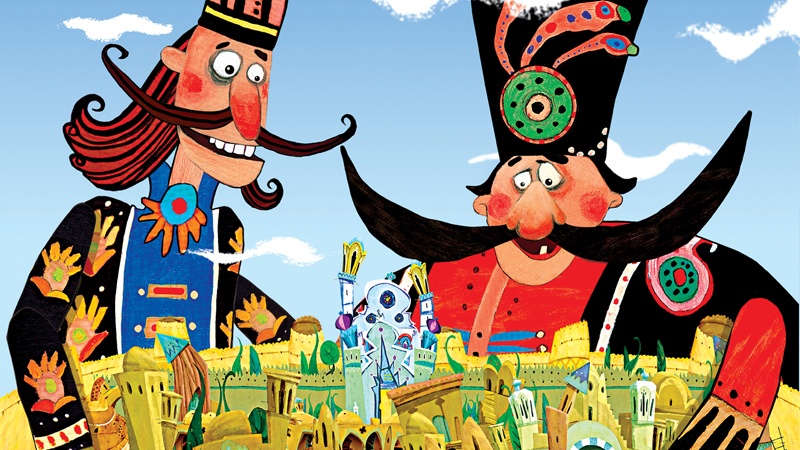
- Title: A Critical Study of Narrative and Semiotic Styles of Shekarestan Animation
- Student: Atefeh Rezvanpour
- Supervisor: Dr. Mehdi Montazer Ghaem
- University: Payame Noor
- Degree: Master’s
- Major: Media Management
- Defense Date: Mehr 1393
Abstract:
This research aims to study the process of representation of Iranian daily life in Shekarestan animation using a cultural studies approach. Since daily life is a broad concept, this thesis emphasizes the manner of representation of traditional and modern life. The theoretical framework of this research is the constructionist theory of representation (based on Stuart Hall’s theories) and the research methodology is semiotics. In the first step and to achieve the overall structure of Shekarestan, we considered this animation as a sign system and studied 90 episodes out of all 108 episodes using Barthes’ three-level semiotic method. During this part of the research, we emphasized elements of daily life such as objects, professions, urban structures, etc., and tried to decode these elements through dichotomies such as poor_rich, limousine_pickup, rural youth_urban youth, etc. to reach the preferred meanings of the creators. In the narrative analysis section, first 16 episodes out of 108 episodes of Shekarestan were purposefully selected and studied in detail using Barthes’ narrative analysis, Fiske and Hartley’s three-level semiotics, and structural analysis (Selby and Cowdery). However, since including all 16 episodes in the thesis would take up a large volume of it, only 4 episodes and 17 sequences were included in detail in the thesis, and the rest of the episodes were briefly mentioned. The results of the examinations show that, from the perspective of Shekarestan’s creators (at least in the studied cases), modernity is a phenomenon that has caused the disintegration of the family, generational conflict, promotion of vulgar models, destruction of work commitment, and the distancing of children from parents. In the studied episodes, rich families have been represented as modern families with negative traits, and poor families as traditional families with positive traits. Gender stereotyping is felt in the underlying layers of meaning. Among the criticisms raised against this form of representation is the biased view of the creators in representing tradition and modernity. It seems that this form of representation, rather than moving towards reducing the generational gap, takes steps towards increasing it.
