
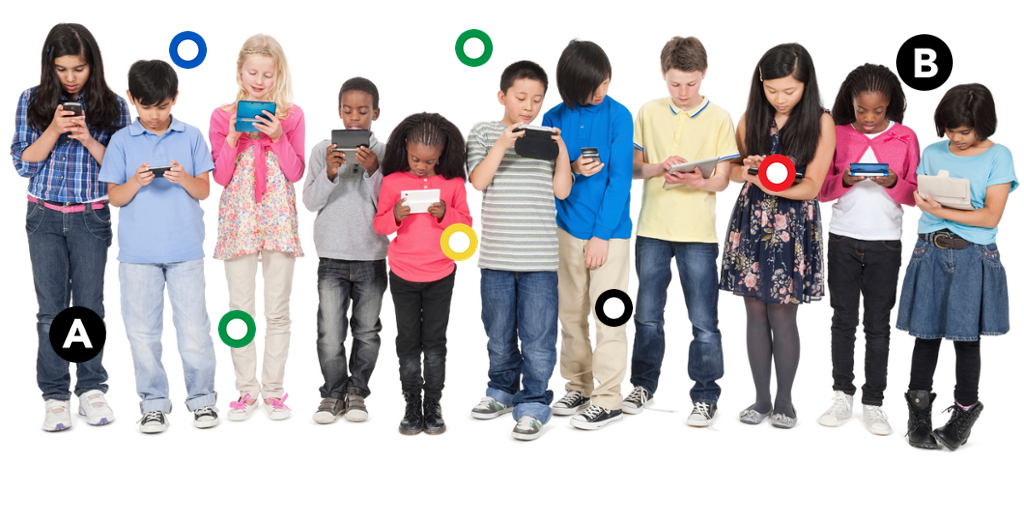
Why should we talk to our children about social media?
Most children and teenagers use some form of social media and have profiles on social networks anyway. Many of them visit these sites and their profiles every day. There are certainly many benefits to using social media, but there are also Now, there are also dangers that children and teenagers should be aware of when using these networks. Therefore, it seems important to talk to your child or teenager about how to use social networks correctly.
Benefits of social media
Social media can help kids with the following:
- Staying connected with friends and family
- Finding and connecting with private movements and charitable causes
- Enhancing their creativity through sharing music, ideas, and art
- Meet and connect with people who share common interests
- Connecting with teachers and their students

Disadvantages of social media
The big downside of social media is that it can be a place for things like fake virtual romances and questionable activities. When we don’t educate our children, especially younger ones, they may end up sharing more than they should. They leave.
Many teenagers:
- They post personal photos of themselves on the Internet and put their real names on their profiles.
- They reveal their date of birth and interests.
- They also include information such as the name of their school and where they live in their posts.
This can make them more vulnerable to people who want to hurt them. In fact, many teens admit to having experienced:
- They interact with people they don’t know in a way that makes them feel afraid or uncomfortable.
- Have received advertising that was not appropriate for their age.
- Sometimes they have falsely entered their age to access certain sites.

Concerns and consequences
In addition to problems like virtual love affairs and online predators, children are also exposed to physical encounters with strangers. Many apps today are able to show the exact location of the person posting, meaning anyone can find out now. Where is the person? Once a picture, video, or comment is posted online, it cannot be deleted or taken back. Sometimes teenagers even think that deleting their post will solve the problem, when it is impossible to completely delete something from the internet. Posting Irrelevant photos can ruin a child’s or teenager’s reputation or create problems for them years later, such as when a manager searches the Internet for a person’s background to gain admission to a university or a good job opportunity. Sometimes sending an irrelevant message It can be problematic for the recipient. Spending too much time on social media can also be frustrating. Seeing how much others are “loving” and always having a good time can make a child feel bad about their own life. shopping.
In the meantime, what can parents do?
It’s important to understand what your children are doing online, but it’s even more important to know that prying eyes and prying eyes can destroy the trust between you and your children. The key is to stay informed. Let your child know that you respect their privacy and just want to know if they are safe.
Tell your child or teenager:
- “Be good.This means that he needs to be careful about his behavior. Make it clear to him that you expect him to be nice to others and not hurt anyone by sending embarrassing messages. Ask him to be comfortable with you and to tell you when others send him such messages. Inform.
- Use the “What would my grandma say now” rule:That means if there’s something you don’t want your teacher, principal, or, for example, your grandmother to see, don’t post it at all.
- Think for a few seconds before hitting the Enter key:Tell your child that if they post something inappropriate, it can be used against them. For example, if the world finds out you’re on vacation and you’ve already posted your home address, you’re giving thieves a chance to break into your home and steal from it. They They should know that they should not include their phone number and exact address in their posts.
- Don’t forget the security settings:Internet settings are very important. Tell them not to tell anyone their password, not even their closest friends.
- Don’t befriend strangers:If you don’t know someone, don’t befriend them. This is very simple and clear, and it provides a lot of security.
- No social media while driving:Aside from safety issues, just a few seconds of distraction from driving can be life-threatening. Encourage your child not to use their cell phone while driving.
- Be comfortable with me:And finally, most importantly, build a good and trusting relationship between you and your child. Tell your child to feel comfortable with you and to talk to you about any problems that arise.
Finally, remember that completely deleting social media is actually erasing the problem and will not help. Instead, we should take advantage of the benefits of these media while being aware of their dangers.
Author and translator: Zahra Vakilian Mobarakeh
References
https://www.wikihow.mom/Talk-to-Your-Kids-About-Safe-Social-Media-Use
https://kidshealth.org/en/parents/social-media-smarts.htmlNO QUERY SPECIFIED. EXAMPLE REQUEST: GET?Q=HELLO&LANGPAIR=EN|IT