
Introduction
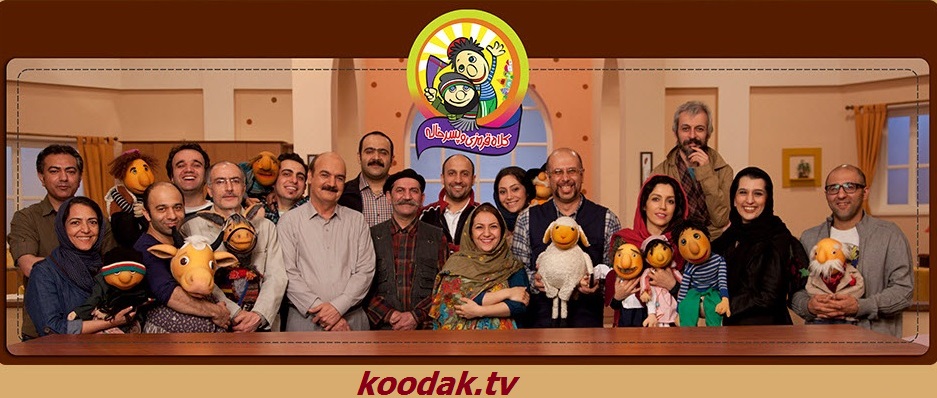
If Iranian television has managed to create ten important characters in terms of character creation, Kolah Qermezi is undoubtedly one of the most important ones in cinema and television. Kolah Qermezi is considered one of the most prominent programs of interest in the national media. The audience’s attention in cinema to Kolah Qermezi’s cinematic productions shows that this program still possesses the potential in the market of imported programs to form a standard program in the field of children. In addition, this program is mostly regarded as an educational program for children where a teacher or host accompanies the child through a series of events and helps them live a better life. In the year 1391 [2012], directed by Iraj Tahmasb and in collaboration with Hamid Jebeli, this program was considered one of the most popular holiday programs. Reviewing this program can perhaps make its production in the coming year more fruitful and richer.
Introduction of Kolah Qermezi 91 Characters
Today, one of the most important parts of program-making in the field of children is characterization, which has been done in the best possible way in the Kolah Qermezi program. Characterization is so engaging that if a child sees the character “Bebei” outside of the television program, they know this character belongs to Mr. Tahmasb’s program, and it can be claimed that if dolls are designed for the characters of the Kolah Qermezi program, they will undoubtedly be the best-selling toy dolls in Iran. Of course, considering the broadcast time of this program, which was 9 PM, it can be concluded that the program was designed for the family; meaning the program is such that in addition to being appealing to the child, it is also appealing to the rest of the family members and has managed to engage them as well. This program is considered one of the most successful children’s television programs of the past three decades. This achievement is due to Mr. Host’s appropriate patience in interacting with the child, who can communicate well with this demographic. In interacting with the characters in the program, Mr. Host tries to adopt an appropriate educational method so that he can be considered a suitable indigenous model for program-making in the field of children.
Important Characters of the Kolah Qermezi 91 Program

1- Pesar-e Ammeh Za: Pesar-e Ammeh Za is one of Kolah Qermezi’s relatives and close acquaintances who, with his rural accent and type of clothing, plays the role of an individual who, besides being simple-minded, is also foolish. He is somewhat distant from modern society and has a simple temperament.
2- Pesar-Khaleh: Pesar-Khaleh’s character has maintained its appeal like the past. He tries to help others through self-sacrifice. Of course, in 91 [2012], instead of buying oil and getting bread, he utilizes new technologies for this purpose.
3- Bebei: Bebei is the progressive character of the program. Of course, he is extremely fond of lettuce and the extent of the issues he thinks about ends with lettuce; he can speak English and has a strange talent. Given that a sheep is not a symbol of intelligence, this character, with his special intelligence and talent, has created an interesting contradiction in the program.
4- Kolah Qermezi: In this program, Kolah Qermezi plays a role with a simple, honest, and childlike personality—just as he had in the past. He has activated his childlike mind well. His mind does not understand most adult rules and through the questions posed, he tries to compel the program’s audience (children) to behave correctly according to adult rules. He has moved away from being a provincial person who entered television in the 70s, and thanks to Mr. Host’s dos and don’ts, he has become familiar with urban living rules. At the same time, he guides new characters who have recently arrived from the province to the Kolah Qermezi program, and with a sense of understanding of his own distant past which he sees in the new characters, he tries to make his provincial relatives well-mannered for living in Tehran.
5- Famil-e Door: Famil-e Door is a middle-aged male character who is very timid. In fact, he represents children with a sly personality type. All his concerns boil down to the opening and closing of “doors”. Even if asked to recite a poem, he recites one that somehow relates to the topic of a “door”.
6- Jigar: He is a donkey sent from the village to Mr. Host by Bibi. He has high physical strength and is stubborn at the same time. He generally repeats his questions and requests several times and is somewhat a symbol of a difficult child.
7- Hamsadeh: This character has a Shirazi accent, recounts painful memories, and instead of crying, laughs intensely. Mr. Hamsadeh is not Mr. Host’s guest, but rather entered the program through Famil-e Door via an intermediary.
Among the other characters of this program are the little baby “In” and Bibi, the bathhouse attendant, Pesar-e Ammeh Za’s sister, and so on.
Among the most important keys to success of the Kolah Qermezi program-making group is their focus on program-making for children. If this trend had not continued for several decades, this experience in program-making certainly would not have taken shape today. The show’s creators have managed to elevate the program by reviewing and processing it, overcoming the challenge of characterization, which is one of the most difficult tasks in children’s programming. In addition to Kolah Qermezi, the program has successfully introduced new characters in such a way that the new characters have easily been able to accompany Kolah Qermezi’s twenty-year-old character, and given the experience gained, in some cases, these new characters have even surpassed Kolah Qermezi’s character.
In addition to the good characterization of the puppets, the group’s attention to character voice-acting can also be praised. The voices chosen for the puppets are very pleasant and charmingly captivate the audience. Aside from the educational aspects of the program, its comedic aspect cannot be ignored; an aspect rooted in the Iranian spirit. As is evident, in Iranian culture, due to the use of speech, poetry recitation has been their long-standing art form. Also, due to the high status of wisdom in Persian speech, witty and instructive points were expressed in the form of humor and irony while observing politeness and decorum.

Positive Points
In the 91 [2012] Kolah Qermezi program, there were many positive points which are highlighted below:
- The educational dimension is one of the biggest concerns for media managers, and this program has created a great capacity for this issue. Through proper storytelling and appropriate interaction with the child, the program has been able to convey many issues to the child, such as how to behave with people during holiday visits, learning greetings, children’s exercise and physical activities, apartment living culture, helping neighbors, proper behavior at parties, helping around the house, driving etiquette, paying attention to the politeness and cultural background of society, teaching the five senses, avoiding the dangers of electricity and hazardous household appliances, etc. Furthermore, the attention to subjects in the program has been shaped with appropriate subject identification, which can serve as a suitable model for other programs.
- This program makes good use of the child’s imagination (fantasy). For example, in the first episode of Kolah Qermezi, utilizing imagination, it managed to use a spatula instead of a reporter’s microphone and solicited opinions from all family members on where we should go for travel. In the form of a game, it engages children in the important topic of consultation and prevents an inevitable argument over a general issue within the framework of a game.
- In performance, the host is a dignified and well-mannered character who knows very well how to deal with children. He usually delivers advice in the best way through storytelling, and this important feat stems from his experience of over two decades of program-making in the field of children.
- Given that a child does not understand general concepts, using external examples can convey concepts well to the child. For instance, a child generally does not understand the phrase: “Be well-mannered at a party,” but when this issue is scrutinized in a program—such as: “how to shake hands”; “kissing hello”—and then the host himself steps forward to show how to shake hands, it conveys the meaning in the best possible way.
- Alignment of the program’s objectives with its educational content and methods: For example, if a program’s educational goal is to achieve a skill or a correct understanding of a subject, the educational methods, information, and necessary visual symbols to reach this subject and goal must be stated explicitly, transparently, and simply for the audience.
- Adaptation to learners’ characteristics: Educational media must be adapted to the abilities, interests, and needs of learners. In audio media such as films, material must be presented in an understandable and simple language. Explanations should not be lengthy, boring, or sparse and insufficient. In choosing words, images, music, tone of voice, speaking speed, and density of material, the audience’s interests and abilities must be considered. One of the learners’ characteristics is their age; because young audiences acquire most of their learning through concrete experiences. Therefore, to communicate with these audiences, we must use a type of educational media within the program as much as possible that provides opportunities to gain first-hand learning experiences or close to it. The content of some episodes of “Mr. Host’s” television program is objective, practical, and understandable for the child audience, such as topics like the benefits of bathing and observing neighborly rights. Some episodes of the program do not have content appropriate and matching the audience (children), such as addressing topics like careful driving, music education, and dealing with questions like how and where Kolah Qermezi was born and other social issues.
- Credibility: The information presented in the program must be useful, correct, new, and up-to-date. The program’s content possessed almost the necessary accuracy regarding the type of information and concepts.
- Stimulating and prompting audiences to action: The media must attract the audience’s attention and maintain it until the end of the program. The proper and balanced use of motivational factors such as music, background sounds, color, and movement can add to the media’s appeal. A program that has a greater ability to stimulate curiosity and activate the audience’s mind, prompting them to intellectual and practical effort and response, will be more successful. In other words, a good media outlet must take the communication process out of a one-way state and turn it into a two-way [interactive] flow. Most of the program’s content was presented attractively, and the creativity and innovation used in presenting the program, given the type of questions initially raised for the audience, create challenges in the audience’s minds that are truly admirable.
- As you know, there are three parenting styles regarding children: authoritarian parenting, authoritative parenting, and permissive parenting. It is better for the program host’s behavior to lean toward the authoritative method. A host must be authoritative and present an educational method through their authority so that a father of a family sitting in front of the television learns authority in a way, and children also interact best with this method. Now, if Mr. Host gets angry in the program—considering he is a symbol of parents—nothing will be achieved. In the program, the child should be led toward a point where if they occasionally do something wrong, they say to themselves, “I wish I hadn’t done this,” instead of saying, “Dad is going to beat me right now.” The last thing Dad does is deprivation; meaning the highest punishment for a child—which is an accepted punishment—is deprivation. The father deprives the child and says, “You now want to watch children’s TV” or “You want to come with us to the party” or for example, “You like many things, you like chocolate. Well, now I am depriving you of these things you like.” This also becomes authority. The child also realizes that by doing something wrong, their father will deprive them of their desires. Given that the child is not forced to lie and that the warning verses of the Quran are more frequent, this issue can also provide a model in the field of upbringing. Encouragement does not necessarily always have to be about a child’s behavior; rather, deprivation can also be one of the successful educational methods, and anger can also show a part of that same authority.

Negative Points
Of course, there are also points in this program that are worth pondering:
1- The first thing that is not observed in this program, like all children’s programs in Iran, is audience segmentation. What can be gathered from the broadcast time of this program and its content is that the program is produced for a family audience. If so, then the requirements of this group of audience must also be observed; meaning the issues raised should concern all members. For example, an issue like controlling television channels—which causes conflict among all family members and each person wanting to watch their favorite program—the jealousy of an older child with the birth of a younger child and the problems that arise between parents and the older child, or the older sister helping the younger brother in the absence of parents or vice versa, are among these very items. Issues that are exclusive to only one individual in this group will cause boredom and alienation for others. Therefore, issues should not be addressed only for adults, only for children, or only for teenagers; rather, their commonalities in issues and concerns must be paid attention to.
2- In the content of the program, one can observe unity within a single program, but this unity, across the collection of these programs, has not taken shape within a subset of a general and single concept. The components of the program must be connected so that they work together and learners receive the message with full comprehension.
3- Sometimes the content of the program does not match the duration of the program very well. In other words, in some episodes, more time is allocated to a simple concept, which causes inattention and disinterest in the viewer.
4- Using incomprehensible words and phrases or expressions that are not within the domain of children’s vocabulary will be detrimental to the program. The failure of the child to understand words can even pose a problem for their engagement with the program and causes the program to struggle in attracting an audience; because child audiences are very sensitive in consuming cultural products, and ignoring this sensitivity leads to audience attrition. For example, an urban child who has never seen a traditional oven cannot laugh at this item.
5- Sometimes in upbringing, the element of feigning ignorance should be utilized; meaning if a child realizes their mistake, we should refrain from finding the culprit. When the child themselves wants to cover up the fault and realizes that their work was wrong, parents’ insistence on finding out who the main culprit is damages their spirit. If the culprit is found, an alternative behavior should be utilized so the mistake is not repeated. In many cases, we see that Mr. Host sets out to find the culprit and reprimand them.
6- As you know, behavior affects the viewer more than words. In this program, the boundaries between older and younger ones are not observed as much as they should and ought to be among the puppets. For example, the program’s characters allow themselves to easily joke with and even mock Famil-e Door. For instance, in one place Kolah Qermezi tells Famil-e Door: “Polish shoes with your mustache.” Considering that Famil-e Door is older than the other puppets in age, this behavior can serve as a license for children to disrespect elders and fail to maintain boundaries.
7- Another noteworthy point is the use of inappropriate language in this program. Expressions like “shoot-bazi” and “vark-begardam” and the like are terms that children model after.
8- In a part of the programs, the puppets deny their actions and, in fact, do not take responsibility for their mistakes, lying easily. At the beginning of the children’s programming season, initially, the child would make a mistake and then realize it, but studies conducted in this field show that the child models the mistake and skips the part of the program where the character realizes their mistake. This issue is well-observed in successful global program-making.
9- Apart from the important issue of age segmentation, program-makers have also neglected gender segmentation. In this program, the problem of giving importance to the female audience also exists. In fact, there is no positive representative of the female gender in this program, and what is observed as the female gender is a very noisy, screaming little girl or a mother whose only duty is drudgery. Such characterizations can damage the role of the mother in the family. The mother of this little baby is mostly considered a nuisance whose departure makes everyone happy. In fact, when the position of motherhood is defined, that home must be organized rather than perceived as a nuisance, and this is a blatant mistake. Unfortunately, making things masculine is one of the biggest flaws of program-making in the field of children. The roles of women and female-centric topics are downplayed in most of the organization’s programs. As pointed out, the roles of mother, sister, and wife must be highlighted in shared areas so we can witness the interaction of female audiences with the program.

10- Portraying rural and provincial people as uncivilized is one of the weaknesses of this program. Rural characters speak poorly and rudely, have very superficial and simple demands, wear untidy clothes, do not observe urban living etiquette, and make a commotion. They touch others’ belongings without permission. They are devoid of love and emotion. They get angry very quickly. They bring Stone Age-level souvenirs and have Stone Age customs; like hitting someone with a stone when they like them. They are hot-tempered and get upset by the word “kind”. Their house-cleaning ceremonies look more like an Apache raid. They have old men who ride bicycles, but backward. They have old women who play tag. During rest time, they disturb others’ sleep, and upon arrival, instead of saying hello and greeting, they pull the host’s clothes, ask for holiday money, put their hands in the host’s pockets, and have no idea what a kindergarten is. They have foods called “Horror Stew” and “Laughter Polo” and say, “We strike under the guest’s chin.” They have rotational kisses. They lack the capacity for perfume and when they wear perfume, they lose their character and mock. This is a drop in the bucket of insults to the foundation of a culture; because authentic Iranian cultures originate in villages. Just as the family is the smallest cell of a society, the village is also the cultural cell of any society, and mocking this culture means mocking the authenticity of these people. In this program, villagers are repeatedly shown as primitive and uncivilized. In contrast, Mr. Host introduces himself as civilized and well-mannered, whom the villagers should model after, and—like Kolah Qermezi, who came to Tehran from the province and shed his primitive state as a result of living with Mr. Host and being influenced by him—become civilized.
11- Regarding the character Hamsadeh, it must be said that he is redundant and, with his memories, depresses his audience. A child imagines and constructs in their mind whatever Mr. Hamsadeh says. The fact that in his childhood, his mother never breastfed him is very painful for a child, or that on a journey, instead of the seventh stone, seven stones were placed and his brothers smashed all his teeth can become a horrific nightmare for a child. The fact that he has fallen into a valley over and over and been destroyed, yet still laughs, creates a kind of contradiction and mental conflict for the child. Such stories are not within the child’s threshold of patience at all. Even if a discussion about family issues is supposed to take place, it must relate to the child, rather than being completely irrelevant and beyond the child’s patience. For example, in one of the programs, Mr. Hamsadeh attributes the cause of the Titanic ship sinking to himself and his fiancée, which is a breach of the national media’s red lines. Generally, a children’s author must know children’s issues and red lines. For instance, referring to a certain scene from the Titanic movie is a blatant crossing of red lines. Especially since he refers to the exact part that is censored in the versions available in the market.
12- Bringing up the story of how a child is born, which has been raised in this television program, requires more focus due to the importance of the subject. In response to the question “When you were a child, why wasn’t I there to play with you?”, Mr. Host tries to invent the simile of “children’s birth in the garden” to compel the child as to why he didn’t play with him in his childhood, which is a sort of education for parents on how to answer when faced with this question. Certainly, this simile indicates the presence of a psychologist in designing the program, but with the entrance of Pesar-e Ammeh Za, he calls this topic into question and ridicules it with his meaningful laughter. This idea has good potential for an answer, but the media is never a vehicle for such questions. At one point in the program, Pesar-e Ammeh Za says: “My aunt gave birth to me,” and in the end, this issue is not wrapped up well. In this regard, it must be said that these questions and more complex examples of this type are usually asked by smart children. If a child asks a sexual question, one should not hesitate in answering. You should immediately ask them: “What do you think yourself?” However they answer, based on their own response, you should answer them; because given that every child thinks differently from another in this regard, raising it in the media will create a crisis in families. In any case, the answer presented does not match the child’s mindset and raises more questions; such topics do not warrant being mentioned in the media and should be answered in person using a suitable counselor. Furthermore, mentioning it in the public media is destructive for that segment of children who do not have this question; because it is not the child’s concern and creates an unwarranted concern. Besides, when these important questions are raised, one must be careful that the discussion does not degenerate into buffoonery. If we trivialize the matter, like the behavior exhibited by Pesar-e Ammeh Za, the discussion suffers more damage. Public media must be aligned with public needs. For example, when a child is born, the principle is that their father and mother do not die. So we do not need to bring up the issue of death. Now, if an earthquake occurs and Bam is ruined or a war breaks out, then the issue becomes general and we must create a program in the media like “Ali Koochooloo” where Ali Koochooloo’s father has gone to war and his mother shoulders the family’s responsibilities. If the media also wants to prepare a program for exceptional children, after production, it should be presented to exceptional children’s rearing centers to be screened for the target children, and it does not have the capability to be broadcast from the national media as a separate and permanent package.
13- Raising some questions that serve as a fundamental wake-up call remains unanswered. This is mostly because this program is run based on improvisation. In most cases, good topics are raised in the program, but they do not reach a proper conclusion.
14- Transmitting messages directly is one of the oldest and most inefficient methods of conveying a message to a child, such as telling a child: “When an elder is around, do not reach out” and “Never interrupt someone’s speech.” If parents state these items to a child in polished language, with punctuation and hyphenation, it will have little impact compared to when the child sees it themselves. For example, the child observes that the mother is talking to someone and the father does not interrupt her speech, which conveys the message well. Unfortunately, in some cases, there are also contradictions in message transmission. For example, Mr. Host says how good guests are, “How much we love guests,” and guests are this and that. Then Pesar-e Ammeh Za says, “I am staying here. Maybe someone wants to come, maybe a guest wants to come, maybe my sister wants to come.” Here, Mr. Host, who loves guests, gets angry and upset about a guest coming. Or when the camera has just returned from an intermediate segment to the studio and, for instance, Mr. Host does not yet realize the program is recording, we see that upon realizing a guest has arrived, Mr. Host is very upset, then suddenly realizes the camera is on and on air and says, “Yes, guests are good,” which can set a bad example.
15- Emphasizing the importance of a matter is very different from creating the illusion of superiority by doing that work through unprincipled praise. Learning a foreign language is very good and important, and it is a window opening toward a global village where international communication is necessary to resolve cultural misunderstandings. However, deluding the child into thinking that those who know English possess extraordinary intelligence and are more cultured and civilized than those around them is an injustice to the origin and Iranian roots of the children of this land.
16- The low variety of the set design throughout the program and the excessive use of neutral and cold colors in the program’s set have bothered the viewer’s eyes, and the audience pays less attention to watching the television screen. Color should be used correctly and purposefully. It is true that neutral colors make characters stand out more, but the location can also have a personality. Using Islamic (islimi) designs, colored glass, relief sculptures of gentle animals like butterflies, cats, deer, and also using sets with movable properties like a merry-go-round or a toy car (though large), in addition to speeding up the internal rhythm of the program, will create variety in subjects. And the festive holiday atmosphere will also be more prevalent in the program.
17- Disregarding the broadcast season of the program has caused us to witness Mr. Host wearing winter clothes, whereas it would be better to see him wearing cheerful clothes appropriate for the holidays and, of course, Mr. Host’s character.
1 Fatemeh Ramezani
2 Shohreh SheikHassani
3 Dr. Nasir Abedini
4 Mahmoud Alipour
5 Ehsan Shariati Najafabadi
6 Hassan Fanidpour
1 Ph.D. student in Philosophy of Education, University of Isfahan; M.A. in Educational Sciences, Preschool Education Orientation, Allameh Tabatabai University
2 Children’s program writer and Rangin Kaman program writer, with publications in the field of children
3 Ph.D. student in Psychology, Hawzah and University Research Institute
4 Graduate of Level 3 of Qom Seminary and M.A. in Television Producing
5 Graduate of Level 3 of Qom Seminary and M.A. in Television Producing
6 M.A. in Educational Technology from Allameh Tabatabai University of Tehran, with a background in filmmaking in the field of children

Scientific-Specialized Quarterly of Children, Adolescents and Media
Second Year, Second Issue, Winter 2011 [1391]
Pages 156 – 180