
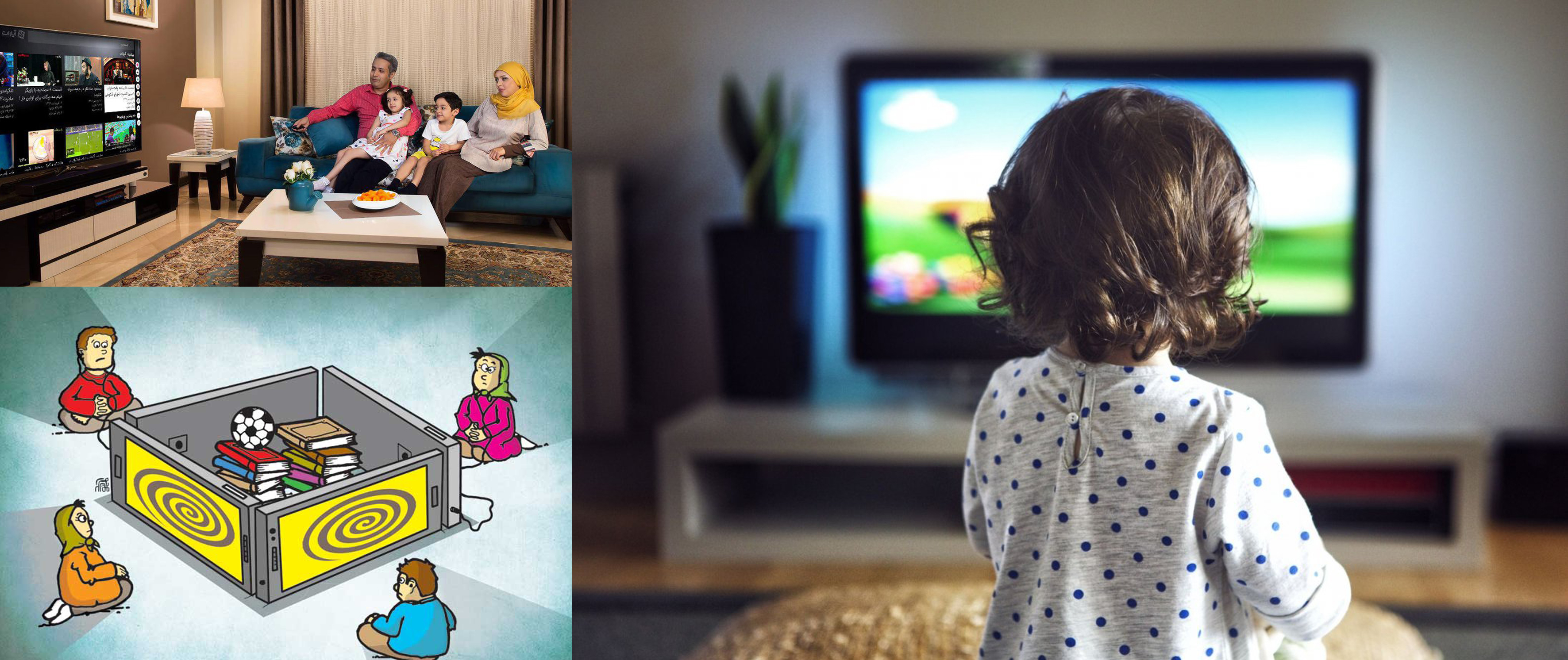
- Title: The relationship between parents’ media literacy and the consumption of television programs by children in Tehran
- Student: Meysam Mousipour
- Supervisor: Dr. Ebrahim Fathi
- University: IRIB – Faculty of Communication
- Degree: Master’s
- Major: Research in Social Communication Sciences
- Defense Date: 2015
Abstract:
Today, parents in their lifeworld are more than ever concerned about their children’s vulnerability to the media space and the huge turmoil of information and communication, and they are always looking for ways to reduce the harmful effects of media on their children. On the one hand, children are the heaviest users of television and, on the other hand, the most vulnerable age group. One of the ways to reduce the aforementioned harmful effects is raising parents’ media literacy as proposed by communication scholars; since parents have the greatest impact on their children’s lives, media literacy provides children with the ability to access error-free messages, which led to a research study aimed at investigating the relationship between parents’ media literacy and the consumption of television programs by 5- to 10-year-old children in Tehran with a sample size of 400 people using a survey method.
Based on the results of this research, more than 95 percent of parents acknowledge that their children watch IRIB programs. 43 percent of mothers “often” and 43 percent “rarely” accompany their children in watching television programs. Only 14 percent of mothers “never” accompany their children while watching television programs;
Based on the theoretical model derived from the theoretical framework and confirmed by the research data, the share of media literacy indices are respectively “planning and structure” (0.533), “skills” (0.285), “audience position” (0.234), and “message and message processing” (0.232).
The multiple regression coefficient and coefficient of determination in the fourth step are R=0.722 and R2=0.521. The coefficient of determination indicates that 52.1 percent of the variance in children’s television program consumption is explained by the 4 media literacy indices.
Furthermore, this study shows that the correlation coefficient between the two variables of parents’ media literacy and children’s consumption amount is -0.573; this inverse relationship indicates that with an increase in parents’ media literacy, the consumption of children’s television programs decreases or becomes purposeful.
