
Author: Mahgan Farhang
Children and adolescents are among the most vulnerable groups in wars, and this is one of the most important topics in movies around the world, studied and examined, yet very little attention has been paid to it.

Children’s cinema
What makes children’s cinema and research discussions about them less important, despite their importance? Children’s cinema needs more care, attention, and effort, both in relation to films for children and films about children. What is lacking in children’s cinema and in general? The expression of childhood in cinema (any kind of film) is important. Features such as depicting how children are treated during and after war, presenting images to familiarize children with the concept of war and at the same time great human concepts such as peace, tranquility and selflessness, and presenting Each country’s national and ethnic beliefs about war. Because this can be interpreted in its own expression and narrative across any border. A child who lived in Germany during Hitler’s time and a child who lived in Poland. This kind of view on the presence of children and war is very important and for both Many things are common: “victimization.”

Be a little stranger.
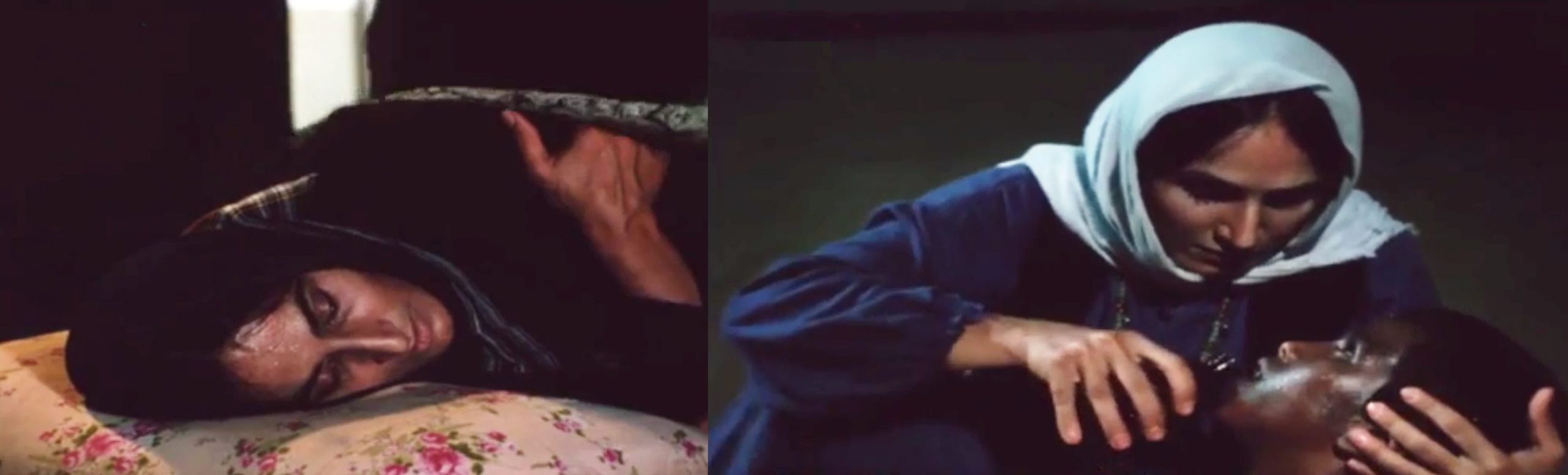
“Basho Gharibeh Kouchek” is one of Bahram Beizaei’s different works. This film was made in 1985 but was banned for 5 years and was released in 1990. This film stars actors such as Susan Taslimi and Parviz Pourhosseini. It can be said that it is the first film Which refers to children and war in Iran in a close and tangible way and shows all the issues of the damage war causes to families and children. Basho is a black-haired child who is displaced from his homeland (southern Iran) during the war, with a term called “war” “The Victims” for whom we faced in Iran. The “Naei Jan” family is a symbol of families whose father went to war and there is no news about them or news comes only very slowly. This is the universal language of film and in all countries that have experienced war, this expression There are women, mothers and children waiting for their husbands, sons and fathers. That is why Basho can also be easily seen in other lands and make its impact. A language that is familiar to all those who know war cinema or are in It is familiar that their land has been at war.

This film may be considered by many to be one of Bahram Bayzai’s best works, but it is important to consider one point: with all the efforts that Bahram Bayzai has made for Iranian culture, art, theater, and cinema, it must be said that this work of his is very different from the others because It has given Iranian children a role and credibility in the war; although other films such as “The Game of the Elders” and many others can also be seen in this regard, Bayzai’s perspective is global and precise, with Iranian expression.
Basho connects the south of Iran to the north. Basho goes from the heart of the soil, hardship, and explosion to green fields and a space like heaven.

At the beginning of the film, the truck stops and Basho, from the darkness, raises the truck’s awning and jumps down, illuminating his eyes with light. Basho is just born. This stranger, who is very strange. His face color, language, and world are different. Nai Jan He discovers Basho with the wide-eyed expression that signifies another signifier and human soul.

Naei Jan is both cruel and loving. Her maternal and feminine anger and love provide her with bread, water, and a motherly love. A love that captivates the audience until the end of the story. The film is full of childishness that everyone goes along with her with every idea. There is joy and sorrow, fear and hope, as there is in nature and in life, where in this film the world reaches unity and human life is linked with animal and plant life. Nai sometimes speaks to the birds of the sky and the birds of the earth in the lyrical sounds of nature, which is why He also understands Basho’s language. He sits him down and they learn the words together.

At the end of this short conversation, the woman finally says “Naei” and the boy says “Basho”. Basho is a localised form of the word “Bashi” which means to stay and be, in short, to live, and Basho stays with them. The name Naei, with the local pronunciation Nahid or Anahid, means “unpolluted and pure”. And in Iranian mythology, the female god Anahita or Venus is the source of all the water on earth. The film’s Naei Jan is a symbol of all this.

Basho touches the four elements (water, earth, wind, fire) with all his being. Basho is a film that studies Iran. A film that shows the bitterness of war, especially for children. But Basho seems to have fallen from the hell of war to a lush paradise. Basho is complete. It has the childish qualities of children: playing, being naughty, waiting, helping, wishing, and taking care of their mother and siblings.
Basho gets used to life in the north, as all immigrants and war victims around the world have had and have had. They have to get used to the conditions of the new place. He gradually becomes like a family man and a supporter of Nai Jan. Basho helps Nai Jan makes a scarecrow that hangs from its hands on tin cans and makes a sound. A conversation develops between Bashu and the man (Nai Jan’s wife) and the man likes the scarecrow’s hands and tells Bashu that he has a good idea for the scarecrow’s hands. The audience minutes later He sees that the man has lost his hands and perhaps he should think of new ideas for the hands of Nai Jan’s wife. In war, some men don’t return, or when they do, they are no longer the same people they were before.

Basho is the story of thousands of children whose circumstances change very quickly due to an event and they even grow up very quickly. Basho sees the differences early and overcomes difficulties. Basho, the Little Stranger is a peace-oriented film. Basho is a child witness.
It is this film and this cinema that bear witness to the hard times that have befallen the people and the nations. In recent decades, historians and cultural theorists have acknowledged the power of cinema in creating narratives of the past. We must fear the short-term memory of humanity, and in this Artists and cultural figures play an important role in preserving the historical memory of people and lands.

According to Pierre Sorlin, after World War II, the image of the child as a war victim became a “unique genre” in European cinema, leaving a common cross-cultural memory of the war in Europe. This was one of the events that improved living conditions and It is considered the damage that comes to every society after war. In Iranian cinema, Bayzai shows the child as a witness to this process with this film. Bayzai is one of the directors who deals well with the world of children in this work; Especially children and war.
The presence of children as observers can be seen in many films, including De Sica’s “The Thief and the Bicycle” or Roberto Rossellini’s “Germany Year Zero” after World War II. This perspective soon spread to other cinemas. The Influence of Neorealism in Iranian Cinema Italy is seen in the works of many great filmmakers with the beginning of the New Wave. In such a way that in the works of prominent directors of Iranian children’s and youth cinema, including Amir Naderi, Sohrab Shahid Sales, Abbas Kiarostami, and Bahram Beizaei, one can see the presence of children who witness events. What is certain is that it is the new and different perspective that has made this film different from the very beginning to this day. Basho, the Little Stranger, is still considered one of the best films in Iranian cinema. The difficult days of war in the lives of children are very much in the spotlight in Iranian cinema. is empty.

Kevin Thomas wrote of the film in the Los Angeles Daily in 1990: “Basho, Little Stranger is ultimately a testament to the transformative power of love. The film’s ability to transcend boundaries of experience, education, and ethnicity is well-documented… He called it lively, humble, and flawless.” KNOWS
Source: Cinema, Cinema
عالی ……..دستمریزاد . تحلیل درست و دقیقی بود . سپاس