
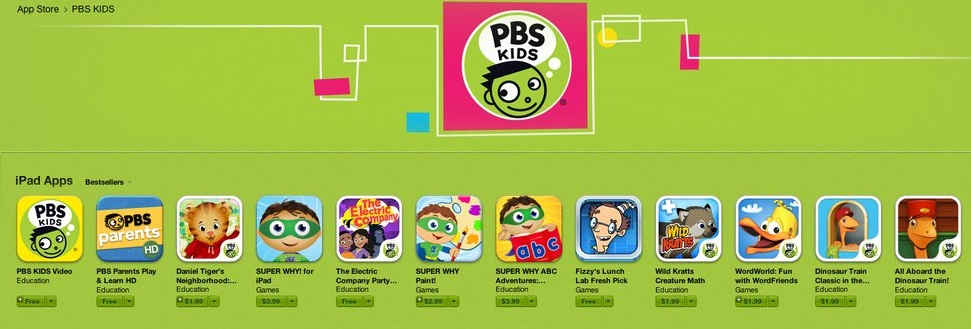
Recently, research has shown that many children receive electronic gifts, for example, for the holidays. The good news and the positive point is that applications are promising educational tools that support literacy, math, science, and life skills. However, the challenge for parents is how to choose the right application for their children.
These tips can guide you in your decision-making:

1. A good application is one that is a complete combination of education and entertainment.
Kids learn when they engage with a task or something. Educational applications establish a balance between interaction and learning. It doesn’t matter whether the application in front of your child emphasizes teaching math or science skills, rather the important thing is that the child has plenty of opportunity to play and do something new. That is, while the characters of the app are familiar to the child, the game itself becomes new and challenging.

2. Discover and play along with your child.
Research shows that when parents have fun alongside their child, the child learns more – this applies to all media. Play an active role in this process by choosing a specific app and deciding why this app is likely to catch your child‘s attention.

3. Choose games that are developmentally appropriate for your child.
Ask yourself whether this app is suitable for your child considering what they can do. Not all 4-year-olds are equal in their abilities, so different apps can be suitable for different children and at different times.
Ask yourself if this skill is what my child is currently looking for and capable of doing? Touchscreen technology is considered a significant advancement in technology for young children because it is very easy and intuitive for kids to move and navigate.

4. Set limits and encourage your child to use other forms of learning and play.
Like choosing a proper diet, you should also choose the right media diet for your children. Having a balanced media diet is like having a balanced diet; meaning the more diverse, the healthier.
Also, the number of hours your child spends sitting in front of the television screen, etc., is important and you should think about it. For example, a rule might be that there is no TV until homework is done. The same rule can be applied in a newer way, meaning the device in question is used only for school homework. This rule is being used more and more these days.

5. Choose apps from trusted and reliable sources.
Look for reputable and trusted educational brands that are known in the field of producing educational content. See if you would like the characters of the app you want to choose to be your child’s role models? Kids tend to imitate media characters. First, make sure the characters, their language and speech, as well as their behavior, are things you are okay with. Also, avoid choosing apps that are scary or use violence to resolve conflicts.
Another point is to talk to other parents about the apps their kids enjoy working with and ask why. Ask them to let you test the app before buying it for your child.

6. See if the apps are trying to market and sell to your child.
Often apps labeled lite or free are looking to sell virtual items while the child is playing in order to make money or link to a related app that requires payment to download. Many of these apps work fine and according to your child’s needs, but some of them just become tools for kids to nag their parents to buy them.