
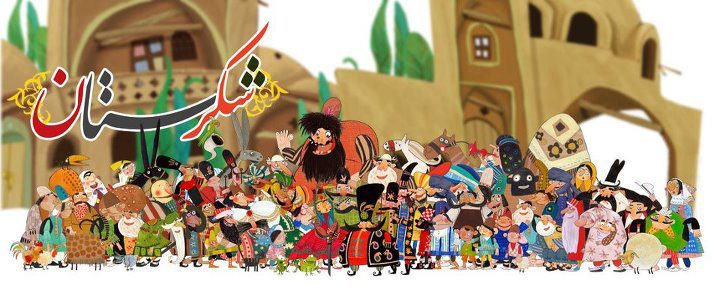
Title: Mass Media and Children’s Religious Enculturation (Case Study: Cultural-Islamic Norms Presented in Shekarestan Animation)
Student: Samaneh Moradi
Supervisor: Dr. Nasser Bahonar
Degree: Master’s
University: Refah Non-Governmental Institute
Defense Date: Esfand 94
Abstract:
Enculturation as a process plays a decisive role in internalizing the norms and values of a culture and shaping the dimensions of an individual’s identity in society. Our issue in this research is to examine the process of religious enculturation of children in a religious society, a society whose people seek help from religious principles and criteria for judgment and arbitration regarding their actions and behavior, and religion is the measure and criterion of their actions. Considering that the flow of enculturation in children and the impact of values and internalizing norms in a child is an undeniable truth, recognizing this process in the child’s religious upbringing, teaching religious and cultural concepts to them, raising a healthy generation, and forming an Islamic society is of great importance. In this regard, multiple factors are effective in enculturation and specifically the religious enculturation of the child. Family, educational centers, peer groups, and media are among the factors and agents of enculturation. Therefore, in the first question of this research, the role of mass media in the religious enculturation of children is mentioned, and in answering this question, the researcher has addressed the subject from three dimensions: “child’s religious enculturation”, “nature and function of the media and its relationship with the socialization and enculturation process”, and “characteristics and needs of the child and adapting the requirements and characteristics of the child in the media”. The child’s world is full of imagination and dynamism, and this fantasizing and imagination-nurturing lays the groundwork for intellectual growth and better understanding of life. In this regard, animation as one of the prominent media in the field of children as a powerful tool can play a role in the child’s enculturation process. Shekarestan animation, which is one of the popular products produced in Iran and was studied as an example of produced works in this research, so that through quantitative and qualitative content analysis techniques, the cultural-Islamic norms presented in this collection could be examined and answer these questions:
What cultural-Islamic norms can be extracted from Shekarestan animation?” and “What classification of the cultural-Islamic norms presented in this animation can be provided?”. The obtained results indicate that the level of adherence to presenting Islamic norms in Shekarestan animation is mostly limited to moral norms and has remained away from mentioning other Islamic concepts. In the discussion of cultural norms and anti-norms, one can also point to this animation’s attention to traditional Iranian culture.