
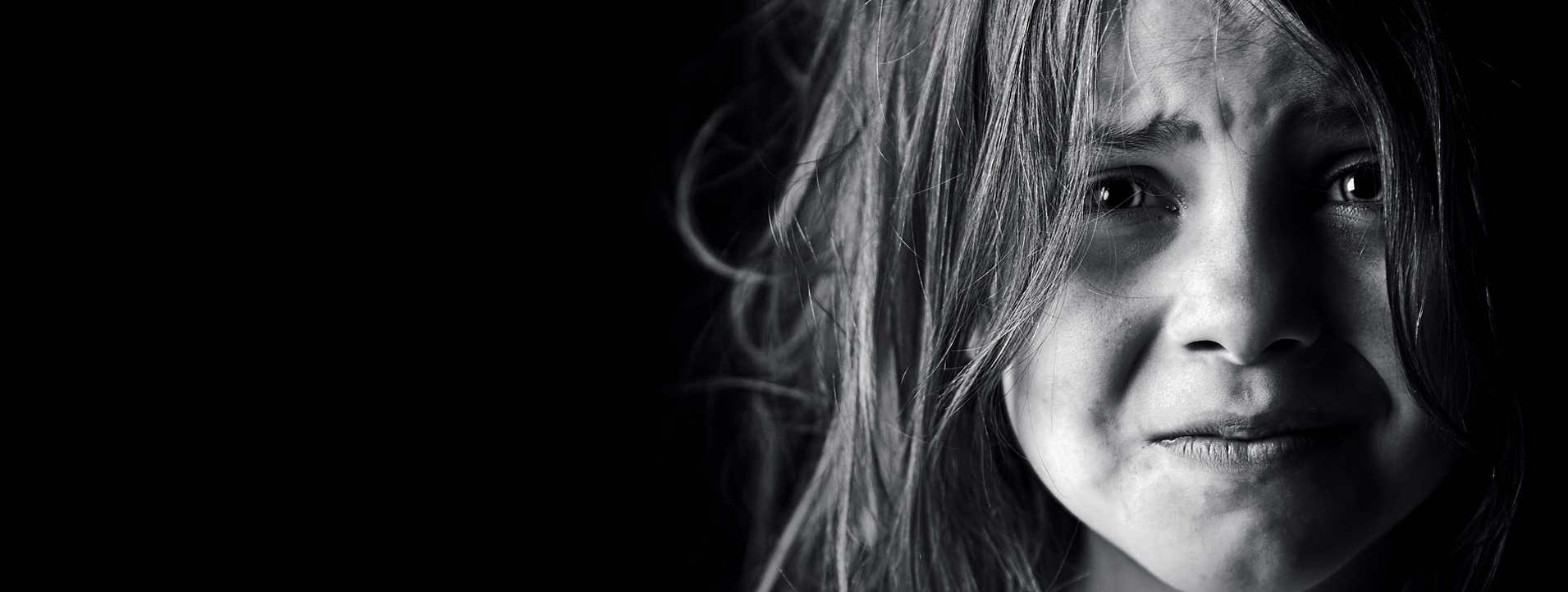
Should child abuse be sensationalized in the media?
Publishing videos and images of child abuse has a direct impact on their adulthood
It has been a few days since pictorial reports of child abuse on social networks have caused distress and hurt the emotions of their users. Unfortunately, accurate statistics in this area are not available due to reasons such as lack of information, inaccurate registration, security issues, the lack of clear boundaries of child abuse for perpetrators, etc. The controversial and sensitive nature of this issue adds to the problem, and unfortunately, official news does not address child abuse as much as it addresses animal abuse—however important that may be—and as much as the law enforcement reacts to it. Meanwhile, the reactions of responsible institutions and organizations in this area are flawed, and accurate information is rarely provided. In any case, according to reports presented by the head of the Social Emergency Center of the State Welfare Organization, Hossein Assadbeigi, and interviews conducted with him in 1396 [2017], it was announced that in 1395 [2016-2017], 86 percent of child abuse cases were committed by parents, with the majority of child abuse statistics being attributed to the father. According to social emergency statistics in 1395 in crisis intervention centers, 1,642 cases of child abuse, i.e., 60 percent of them, were committed by the father. Out of these statistics, 739 cases, i.e., 26 percent, were committed by the mother, 8 cases by the sister, and 20 cases by the brother. According to the head of the Social Emergency Center of the State Welfare Organization, only 1.5 percent of child abuse cases were committed by strangers.
The saddest part of these reports is that child abuse mostly occurs within the sacred sanctuary of the family, a place where a child should feel safe and peaceful. When children are abused and harassed by their caregivers and nurses (kindergarten, school, hired nanny, sister, brother, etc.), they are not only physically and emotionally harmed, but they often blame themselves due to the heartbreaks caused by those whom they loved and trusted. Therefore, the consequences of child abuse are doubly sad and their impact is often longer-lasting. In some cases, these children themselves become agents of child abuse; a child who has been abused turns into a child abuser themselves (Corsaro, The Sociology of Childhood, p. 432). The important issue in the mentioned point is that new child abusers do not necessarily repeat the form of child abuse of which they were victims. This means that violence against children will become more dangerous day by day, and its forms will become newer.

Child abuse has four categories: neglect, physical, sexual, and emotional. In global statistics, the highest amount of child abuse is of the neglect and physical types, and according to Hossein Assadbeigi, this statistic applies to other amounts in Iran as well, although no statistics regarding its exact rate have been raised.
Determining the boundaries and examples of child abuse is also completely controversial; whether parental punishments can necessarily be considered child abuse is a matter of question and debate. Most child abuses occur because parents consider children to be entirely their own property and claim the right to any kind of treatment towards them. However, most people accept that parents’ power and authority have limits, and most laws and regulations regarding child abuse seek to determine in what cases it can be said that parents have exceeded their limits of authority. In Iran, according to the Bill for the Support of Children and Young People submitted to the Islamic Consultative Assembly (Parliament) by the government in 1390 [2011], specific definitions and examples are mentioned. In paragraph “D” of article one of this bill, an endangerment situation indicates circumstances that provide grounds for legal intervention to protect the child and young person in order to prevent victimization or harm to his or her physical, psychological, social, moral, security, or educational health, and article 3 states 12 examples of endangerment situations for children and young people, the fifth of which is continuous violence by parents, guardians, legal custodians, and other family members against one another. In this regard, the Welfare Organization, law enforcement, the Prisons and Security and Corrective Measures Organization of the country, and the Ministry of Education each have duties, and punishments have been devised according to the examples of child abuse. The extent to which and with what guarantees these laws are implemented is a matter of debate, and we often witness negligence in this area.

The main reason for writing this text is to address how child abuse victims are sensationalized in the media and how information about them is disseminated. The main question is whether media coverage of these cases, which involves a limited number of individuals, helps the abused children or causes more pressure to be imposed on them? Or can this manner of media coverage prevent or limit child abuse as a social issue?
People’s privacy is meaningful in four areas: personal information, physical privacy, communication privacy, and spatial privacy, and it is a relative concept whose scope and domain vary from one culture to another. In this regard, people’s private and personal lives, especially aspects that have no impact on social trends, are a domain that must remain immune from any intrusive monitoring assault, even by resorting to the right of free access to information (Derakhshani, Nikbakhsh, Shakeri, and Rad, Guide and Rules of Program Making for Toddlers, Children, and Young People, p. 29).
The necessity of preserving and protecting people’s privacy and non-disclosure of their secrets and private matters is one of the fundamental rights of individuals in a society. Article 17 of the International Covenant on Civil and Political Rights states: No one shall be subjected to arbitrary (without legal authorization) or unlawful interference with his privacy, family, home, or correspondence, nor to unlawful attacks on his honour and reputation. Likewise, Principle 25 of the Constitution of the Islamic Republic of Iran states: Inspection and non-delivery of letters, recording and disclosing telephone conversations, disclosing telegraphic and telex communications, censorship, communication and non-delivery thereof, eavesdropping, and any kind of investigation are prohibited except by law.
The importance of this issue is such that legal punishment is considered for dealing decisively with violators of certain aspects of people’s privacy. In the Islamic Penal Code (approved in 1374 [1995]), Article 745 states that anyone who discloses people’s personal and family secrets without consent in a way that leads to damage or customarily causes defamation shall be sentenced to imprisonment from ninety-one days to two years or a cash fine from five million Rials to forty million Rials, or both punishments.

When “privacy protection” is spoken of, minds mostly drift towards the adults of society, and there is no perceived need to consider this right for children, because children are assumed to be subordinate members of society who lack the necessary cognitive growth for agency and are under the sway of adults’ actions and decisions. Meanwhile, the “child’s right to privacy” and the “protection of children and young people in cyberspace” is an important and essential matter. The reckless publication of images and videos of children on Instagram, Telegram, Facebook, etc., can act as “identity-building decisions” for the child, having a direct impact on their growth and self-actualization in adulthood. Each of us might experience personal problems in our youth and middle age while having no interest in publishing and sharing them with others, and in the most laboratory-like form, if someone wanted to interview us about these issues, we would refuse to talk. How is it that we do not consider this right for a child whose life events happened without their will and who had no role in them, and yet we proceed to publish their images with seemingly logical yet fundamentally incorrect reasons? After passing through this crisis, this person wants to live, grow, and self-actualize in this very society, but they still struggle with a “pre-made” and “non-self-made” identity that disrupts the rhythm of their life. These individuals choose their future life behaviors and goals in accordance with the identity that others have constructed for them; therefore, because society reacts differently to an “individual abused in childhood,” negative pressures on these people for free life choices increase, and ultimately, by limiting the extent of their presence and appearance in society, their personal lives are damaged. It is quite clear that these individuals face limited choices ahead of them in education, career, forming a family, etc.
Article 17 of the Bill for the Support of Children and Young People states: The disclosure of the particulars and identity of a victimized child or young person or one at risk in non-legal cases or judicial decisions, through mass media or distribution, reproduction, publication, and display of films and photos and the like of them is considered a crime, and the perpetrator shall be sentenced to ninety-one days to six months of imprisonment or the payment of a cash fine of ten to one hundred million Rials. Therefore, interviewing damaged children, even with the child’s own consent, is by no means permissible. Hence, even if individuals publish images of these children with good intentions, they must take these points into consideration and be aware of the consequences of their actions.
The bottom line is that the media coverage of child abuse for necessary follow-ups and raising society’s awareness should not necessarily be accompanied by publishing the child’s identifiable image; rather, the desired goals can be achieved merely by publishing the news of this incident. This point seems obvious, but repeating it for the sake of re-emphasis does not hurt: publishing these images and videos can help the child in the short term, but it deprives them of the right to a normal and desirable life in the long run.
Despite all the problems, it is hoped that with the enforcement of laws, the resolution of structural problems alongside the follow-ups of NGOs (Non-Governmental Organizations) and all concerned individuals and activists in the field of children, as well as public awareness and the spread of media literacy, children’s rights—especially in Iran—will receive attention and appropriate defense for them will be carried out.
Author: Naser Tafaghodi
Reprinted from Farhikhtegan Newspaper
References:
- Corsaro, William (2014/1393). Sociology of Childhood. Alireza Kermani and Masoud Rajabi Ardabili. Tehran. Sales
- Derakhshani, Shiva, Nikbakhsh, Mourseh, Shakeri, Reza, Behnam Rad, Reza (2009/1388). Guide and Rules of Program Making for Toddlers, Children, and Young People. Tehran. Islamic Republic of Iran Broadcasting