
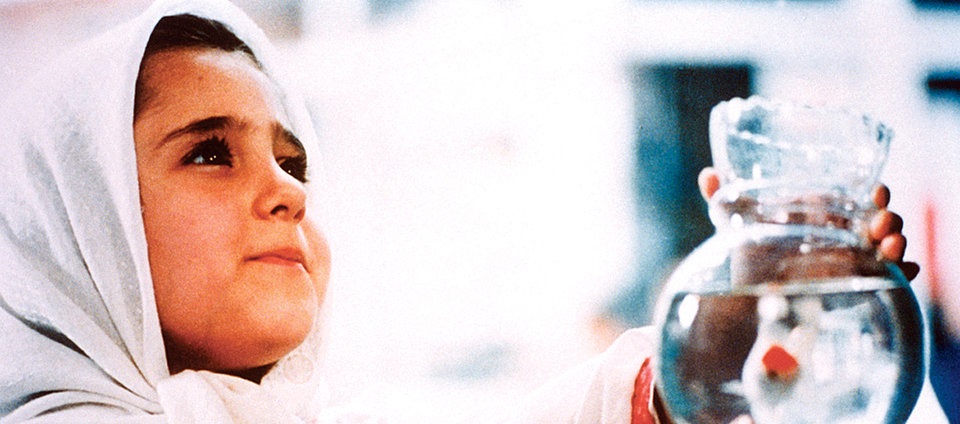
Children’s cinema has been neglected and mistreated in the country

Mohammad Ali Mirzaei: It has become repetitive. The story of neglect and lack of appreciation for children’s cinema in our country has been told so much that repeating it has no appeal. It is as if we are getting used to forgetting the golden age of children’s cinema, and to the mistreatment and neglect of this genre. Poor screening, minimal advertising, and very little support are the least of the troubles that befall children and young people’s films, especially if the film is truly “independent”.
“The Legend of Golabad” is a recent production in children and young people’s cinema. A musical and independent work that, regardless of its technical quality, has fallen victim to poor screening and media indifference, resulting in neither good box office sales nor being screened for students. Last week, Seyed Mehdi Mirfakhraei and Mohammad Reza Abbasnezhad, the producer and director of this important film, were our guests to talk about these indifferences and, of course, their hope for the future.

First, tell us about the idea of writing the screenplay and the process of its execution?
Abbasnezhad: The spark for working on the story of Hassani goes back almost seventeen years, when I was performing a musical theater called “The Story of the Lonely Tree”. The focus of this story was environmental issues. I was very fond of the story “Hassani Didn’t Go to School” and started writing the story of the film “The Legend of Golabad” until I met Mr. Mirfakhraei. I gave him the story, and after three years he contacted me to work on this subject. After that, it was decided to turn it into a screenplay, and I designed its dialogues in verse based on the story.

Mr. Mirfakhraei, what was your motivation for making this film?
Mirfakhraei: Nowadays, musical and comedy films have to break many norms to get attention. But we are not capable of doing that. On the other hand, one of my lifelong concerns has been working for children, because issues such as respect, upbringing, thrift, marriage, etc., are always my priorities in life. For this reason, making this film was entirely of my own volition, and we tried to make it within the framework of the system and ethics. But our difficulty started after production; the lack of appreciation from the Ministry of Education and the Guild Council discouraged us from making children’s films, which is truly regrettable, especially since the film’s distribution matters had been sorted out before the Children and Young People’s Film Festival. I am satisfied with the film’s production process, but the main problem is post-production.

Mr. Abbasnezhad, audiences mostly know you as an actor; wasn’t directing a risk for you?
Abbasnezhad: Yes, people mostly remember me in series such as: Pedarsalar, Detective Alavi, Family Conspiracy, etc., but in terms of directing, in 1972 [solar year], we worked on a telefilm called “Sunny Night” in collaboration with Mr. Majid Torghabi for Channel 1 of IRIB. In most works, I also worked as an assistant director, programmer, and production manager, and this was perhaps considered my first professional cinematic work.

Were you satisfied with the film’s screening process?
Mirfakhraei: Not at all. Imagine parents who work until 5 PM; naturally, they choose the evening or night time to watch a movie. It is obvious that morning screenings have no customers, yet our friends placed most of the film’s showtimes in the morning hours. Apart from the Ministry of Education—and this organization also placed no value on the film—there is no reception and most screenings are empty. Most of the sales for the film “The Legend of Golabad” were in screenings after 7 PM, but films that carry no intellectual or moral weight replace works like “The Legend of Golabad”, which really costs the country’s educational and cinematic system dearly.
Abbasnezhad: This is neither logical nor fair. For example, SNN (Student News Network) is the second media outlet in this past month to talk about this film. Our cinema has become polarized, and appropriate value is not given to children’s cinema.

Is your film entirely a musical?
Abbasnezhad: My perspective was to work on a proper rhythm, following a meter matching the music, that could convey the message to the audience. Except for some dialogues, most of the film’s dialogues are musical.

With what goal and vision did you make this film despite the difficulties and obstacles?
Mirfakhraei: You brought up a good point. During these three years, I lost the dearest person in my life, my mother, whose wish was also to see the outcome of my work. I made many efforts to secure investment, and ultimately I undertook a large part of it myself by taking out a loan. Currently, a lot of debts have accumulated for this film, but I am not complaining because I did this work with all my heart. However, I am disappointed by the ungraciousness of some friends. Mr. Honorable Minister of Culture and Islamic Guidance, you who helm this position, do you pay any attention to children’s cinema? Or does IRIB support this matter? These are issues that I, as a producer, raise with you so that hopefully your media outlet can reflect this matter. In this work, we tried to address values and ideals, using set and costume designs in accordance with the country’s civilization, addressing the subject of handicrafts, and so on.

Do you have any new work in progress for television?
Abbasnezhad: Yes, a series called “Close to Paradise” directed by Mr. Hassan Hedayat, which started filming since the New Year of last year, but unfortunately has been halted multiple times due to financial problems.
With all these problems and dilemmas that exist in this field, do you intend to work on anything else?
Mirfakhraei: I thank you very much for sitting down to listen to our grievances. We are inclined to make another work that points more toward ethics-driven themes, which we hope to start along with Mr. Abbasnezhad. We hope that this time the relevant authorities will help us achieve this goal.