
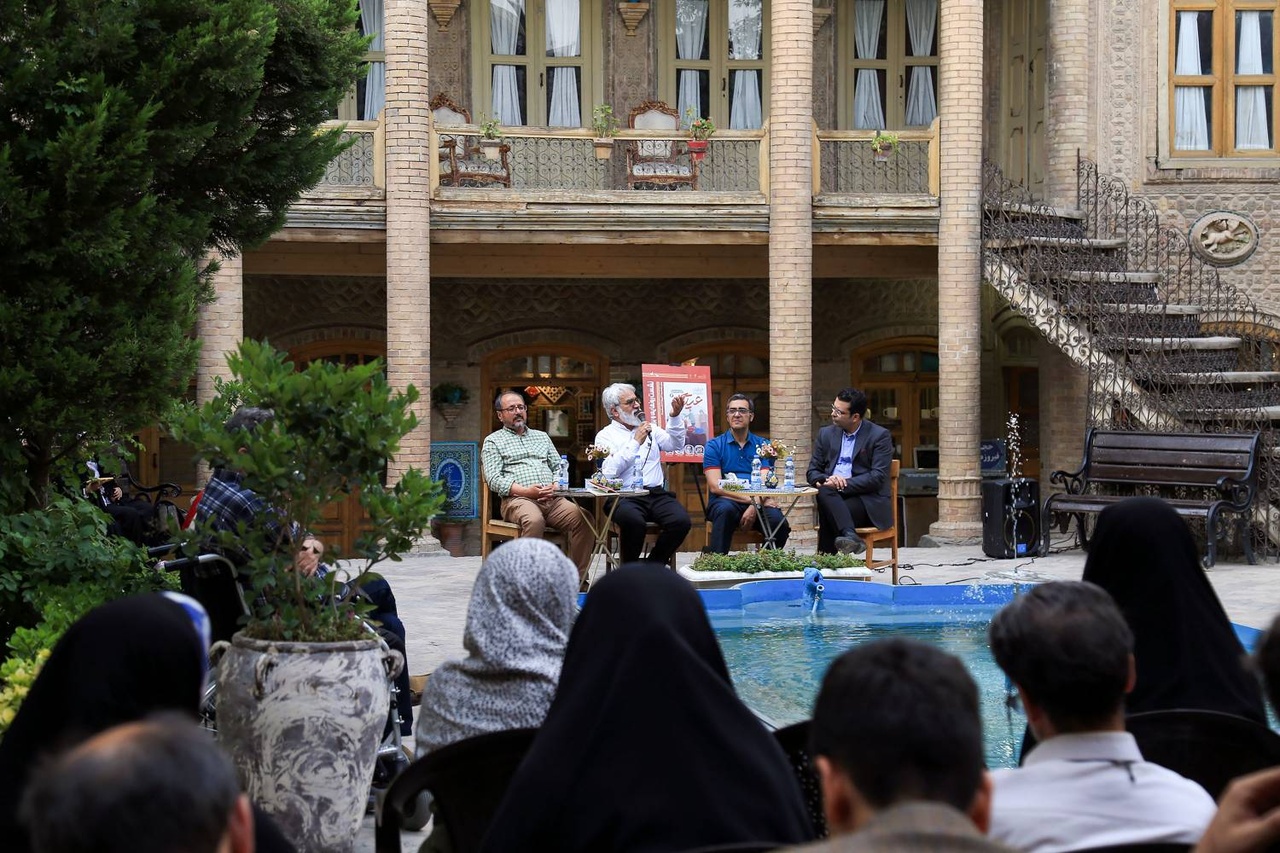
The director of Behnashr Publishing said: “Eidgah” combines the climate of Mashhad and a story centered on the life of Imam Reza (AS), and this is one of the strengths of this work.
According to the Children and Media Association, quoted by IBNA He enjoys and is entertained, something that is missing in our stories today. This work combines the climate of Mashhad and a story centered on Imam Reza (AS), which is one of its strengths.
Farzaneh stated: “In the field of fiction, we are in dire need of creating works with a view to regional geography. One of the important features of the book is that it is a story and that it is written about the customs, traditions, dialect, and neighborhoods of Mashhad, which are completely familiar to the people of Mashhad.” The work has an attractive and strange beginning and ends in the heavenly atmosphere of the Razavi court.
He continued: “Reading this book is a comfort for the reader, although writing it has brought many difficulties for the author. The ending of the story is not predictable for the reader. The work is not a slogan; rather, it is mission-oriented.”
The necessity of addressing the climate of Mashhad in fictional works
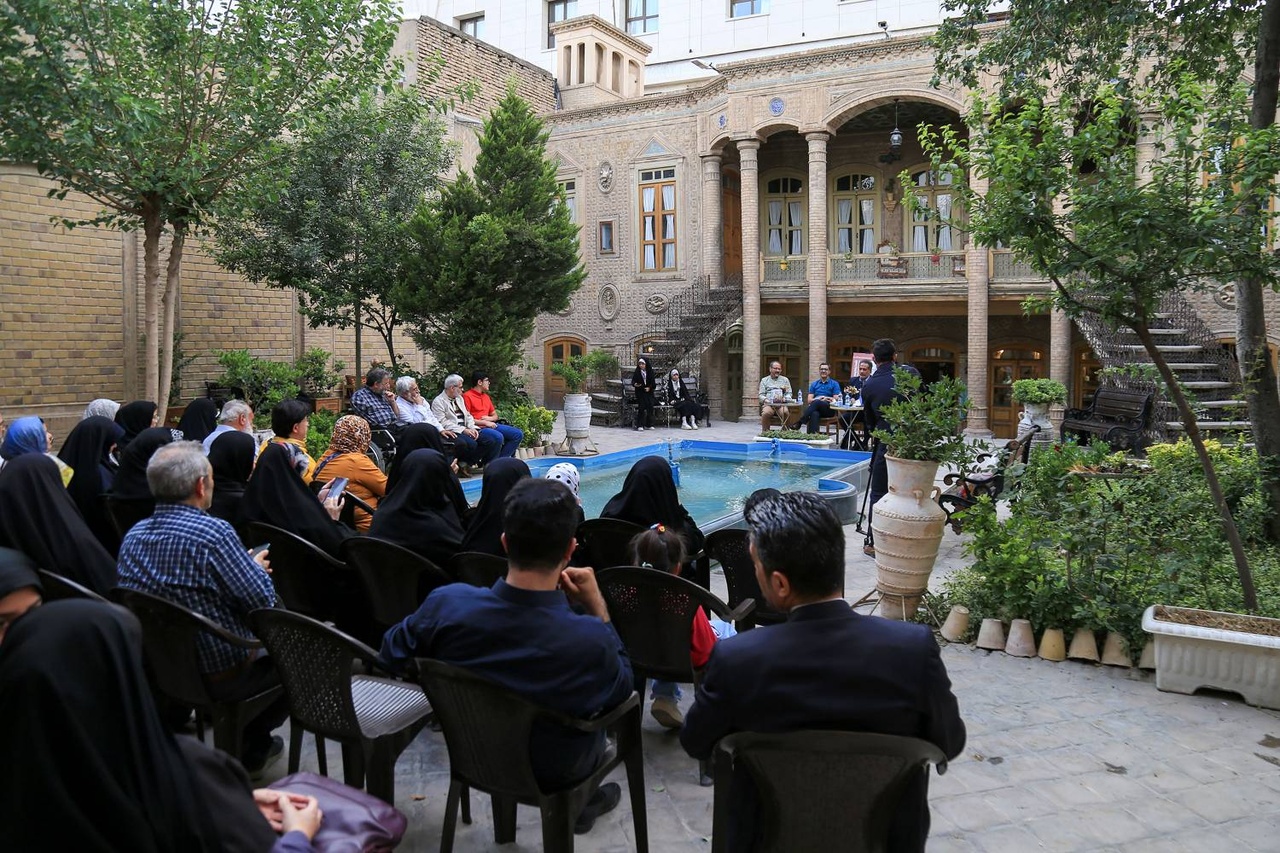
Seyyed Alireza Mehrdad, author and secretary of the “Eidgah” book launch meeting, said: “Holding this meeting in Mashhad’s Darogha House, which is related to the historical and cultural heritage of Mashhad and the Eidgah neighborhood, is a valuable initiative.”
He clarified: “I have read other works by Khosravi Rad, such as Narration of the Giti, Tale of the Beauty, and so on. The landscape of Mashhad, its neighborhoods, culture, customs, and its glory are rarely seen in works of fiction at the national level, so much so that we read about it as a region in the story of “Seyyed Reza.” The writers in They neglected to mention the climate of Mashhad in the story.
Emphasizing that Khosravi-Rad, by writing the collection “Stories of Muhammad,” is continuing the path of the late Thaskori in expressing the climate of Mashhad in fiction, Mehrdad stated: “The late Saeed Thaskori was the initiator of this path and he introduced the literature of the city of Mashhad into the field of fiction.”
He continued: “In the book “Idgah”, the author has created a character who has a great talent for becoming a type and portrait. In this work, instead of facing the location of the neighborhoods, we are faced with human moral topics: the characters are modesty, politeness, They have the honesty, camaraderie, and chivalry that characterize the children of the Eidgah neighborhood in the 1960s. Customs and traditions, centered morality, expression of moral virtues, and respect for parents are prevalent in this work.
Fluency and simplicity of language are the outstanding features of literary masterpieces.
Mohammad Khosravi Rad, the author of the work, said at the meeting: “When I was a child, I used to read the works of prominent writers and world masterpieces. I used to say to myself how simple it is and how anyone can write stories similar to these. I have always tried to use language in my works.” I used a specific language. After middle school and high school, I tried to write prose that was simple and bordered on memoir and reportage, while also being dramatic. Later, I moved on to writing nonfiction and short stories. These experiences proved to me The simpler the prose of a work, the more difficult it is to write, and I haven’t reached that point yet.
The author of the book “Idgah” continued: “I was always looking for a specific climate and atmosphere in the genre of realism, fantasy, magic, etc. to write a work. Later, I came to the conclusion that if we want to become global in the field of fiction, we must write our own story.”
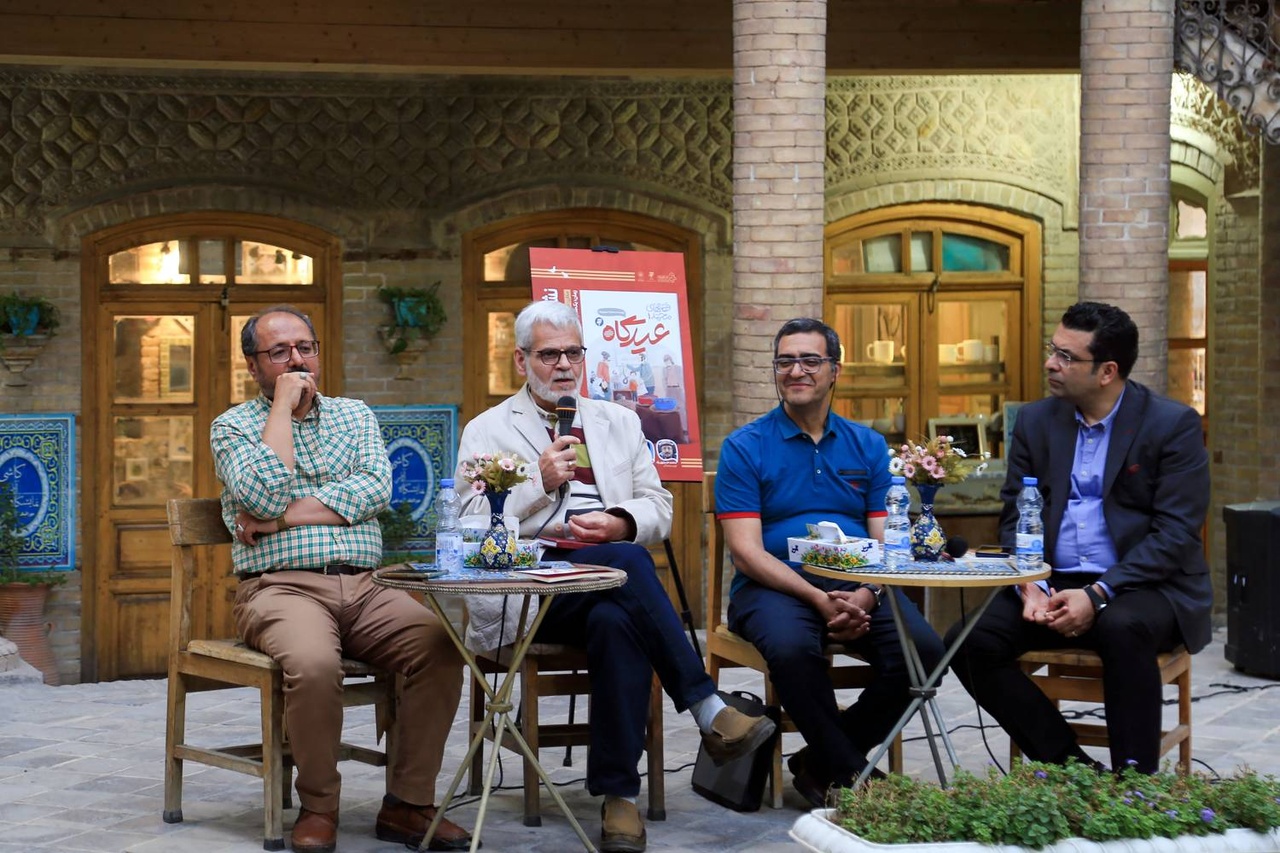
Khosravi Rad emphasized: “The combination of the climate and the culture of the Mashhad region creates the Khorasan school. In the book “Naql Giti”, I also tried to express the culture of Mashhad for an adult audience, which was published by the Adab Publishing House.
He continued: “In “Eidgah” I tried to write a work that was both simple and could be read by everyone, and at the same time, it was a story and not a slogan. This work was my first experience writing a novel specifically for teenagers. I tried to write a work that would appeal to adults as well as teenagers.” Enjoy reading it. I cannot claim that I am not the author of the work, but what has been said does not entirely correspond to my personality. In some parts of the book, my lived experience is expressed, and in some parts, I have used the experiences of others.
Recreating the 60s in Mashhad
Majid Qaysari, a writer and book expert, also said at the meeting: “The text is sincere from the beginning of the story. The teenage character in the story is trustworthy and adheres to this moral point until the end of the story. He, along with the teenage characters in the neighborhood, tries to solve his problems.” blate.
Pointing out that many of the events and facts are believable to the people of Mashhad, he added: “What stands out in this work is the recreation of the 1960s in Mashhad. In this work, the author does not distance himself from the reader, and the story of Mohammad and the author are one. We have created a narrative atmosphere We read in the form of a memory, and this has caused readers who are not from Mashhad to not notice the geographical region of the work.
He stated that another feature of the book is its social background and stated: “This work well shows the atmosphere of war and its consequences, such as the Shiite ceremony for the bodies of martyrs. In this work, some characters in the story speak in the Mashhad dialect and some in the standard language.” They say.
The book “Eidgah”, the first book in the collection of Mohammad’s Stories, written by Mohammad Khosravi Rad, has been published by Beh Publishing in 104 pages, in a limited edition of 1,000 copies, with cover illustrations by Esmaeil Cheshrukh and layout by Saeed Salimi, at a price of 70,000 Tomans.