
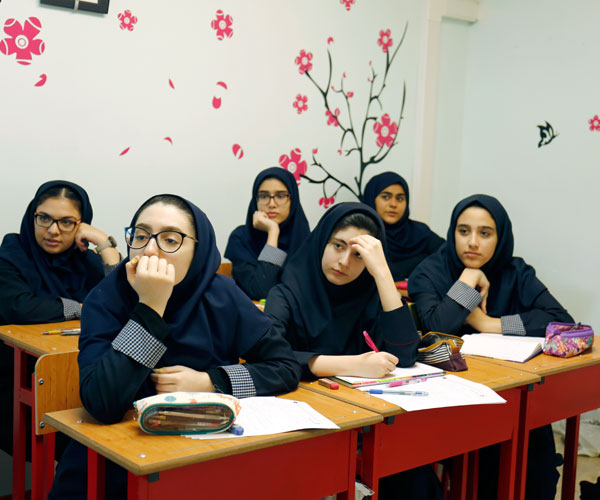
Title: Investigating the Relationship of Emotion Self-Regulation and Social Intelligence with Social Goals in Female High School Students in Tehran
Student: Zahra Ansari Jaber
Supervisor: Dr. Masoud Gholamali Lavasani
Advisor: Dr. Elaheh Hejazi
University: Tehran, Faculty of Psychology and Educational Sciences, University of Tehran
Degree level: Master’s
Major: Educational Psychology
Defense Date: Bahman 94
Abstract:
The purpose of the present study is to investigate the relationship between emotion self-regulation and social intelligence with social goals. For this purpose, using a multi-stage sampling method, 380 female high school students in Tehran participated in this research. They completed the Garnefski Emotion Regulation Questionnaire (CERQ, 2002), Tromso Social Intelligence Scale (TSIS), and Pintrich & De Groot social goals scale. Pearson correlation coefficient and stepwise regression analysis were used to analyze the data. The results showed that social goals and social intelligence have a positive and significant relationship with adaptive emotion self-regulation. The relationship between maladaptive emotion self-regulation and social goals is a negative and significant relationship. Social intelligence has a positive relationship with adaptive emotion regulation and a negative relationship with maladaptive emotion regulation. The results of stepwise regression analysis showed that among the components of emotion self-regulation and social intelligence components, adaptive emotion regulation strategies and social awareness are, respectively, the best predictors of social goals. Overall, the findings indicate that students who have high emotion self-regulation and social intelligence possess good communication skills and social relationships and follow clear social goals.
Keywords: Emotion self-regulation, Social intelligence, Social goals
