
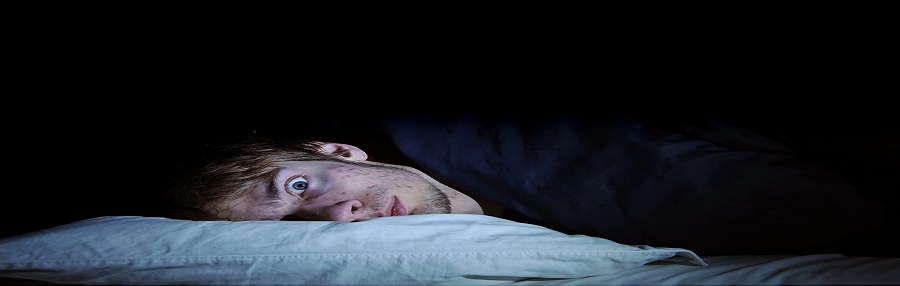
Using technology before going to bed: Do electronic media devices really cause sleep problems in children?
Electronic media devices are both useful and have become an inevitable part of modern life. But despite all their benefits, they can also be problematic.
– The blue light emitted by the screen can give the brain a new schedule to delay bedtime.
– The exciting (and sometimes upsetting) content that children encounter on their electronic media can also do the same, causing children to fall asleep later after going to bed and perhaps even stay awake during the night.
In various countries around the world, the use of electronic media has been associated with sleep problems in children – problems such as delayed sleep, having less sleep time, and feeling sleepy during the day.
Now the question is, how serious is this problem? And what can we do about it?
Children’s use of blue-light emitting digital devices before bed is almost equivalent to consuming a dose of caffeine, and studies show that most kids are at risk. Therefore, if we know why and how electronic media impairs sleep, we can also learn ways to protect against it. By monitoring content, enforcing a specific time window for media use before bed, and also using blue light filters, we can help our children get better sleep.
Pay attention to the following points:
1. A global shift in children’s nighttime lifestyle:
From North America to Europe and East Asia, studies show that everywhere in the world, 68 to 95 percent of children—even children under 3 years old—use electronic screens daily. Meanwhile, both parents and children have mostly admitted to using their devices hours before going to bed, but some kids even use these devices after falling asleep.
For example, in a study of over two thousand Italian youth, researchers found that 40 percent of children aged 1 to 3 used an electronic screen for 30 minutes before bedtime. For children under 14, this number reached 65 percent.
In a large study conducted in Australia, almost half of teenagers said they used their mobile phones after bedtime, when they should ideally have been going to sleep.

2. Artificial light reprograms the brain to remain alert throughout the night, and the blue light emitted through electronic screens can have a special effect on disrupting sleep.
Scientists have long realized that exposure to bright light before bedtime can delay the production of melatonin, the sleepiness hormone. But in recent years, experiments have exposed us to very important details in this regard. Some components of white light—with wavelengths in the range of 460 to 480 nanometers—may be particularly useful for sleep disruption. This is the range of light that appears blue to our eyes and is in the range that can cause alertness even when light levels are low. Therefore, neurons in our retina are adjusted to make the maximum necessary response to blue light. In fact, they send a message to the brain to this effect: Wake up, stay alert. It is daytime!!! This effect in experiments is equivalent to the effect of caffeine consumption.
This effect is potentially useful for people working night shifts. But it is bad news for people who want to sleep after watching movies, playing video games, using computers, or checking messages on their mobile phones because electronic screens emit blue light.
Even worse is that children may be particularly sensitive to the damaging effects of artificial light.
3. Media content can cause sleep problems in children and adolescents, and this content doesn’t just include scary things (like ghosts and monsters) that we need to watch out for.

Violent or scary media content is one of the common factors of sleep problems and plays a significant role in children’s nightmares as well. For example, when Jan van den Bulck surveyed thousands of school-age children, he found that “television content was present in the nightmares of 33 percent of children, and computer games in the nightmares of about 10 percent of boys and 5 percent of girls (Van den Bulck 2004)”.
In another study, Michelle Garrison and her colleagues tracked the status of over 600 preschool children and found a clear link between electronic media use and sleep problems in children. But interestingly, some parents unfortunately put their children to sleep with the television on!! And more interestingly, researchers succeeded in reducing sleep problems in preschool-age children by changing the media content they consumed.
It is important to note that children do not necessarily have to actively watch inappropriate content or violent and scary scenes to experience night terrors and sleep problems. Rather, indirect exposure to such scenes can also be influential. Like when a 5-year-old child accidentally overhears bad news their father is watching.
4. The vast majority of studies have confirmed the link between electronic media use and changes in sleep patterns.
Research has proven that both television and smaller electronic devices are independently associated with the problem of sleep deprivation. Reportedly, children who sleep near a small screen (like a tablet or mobile phone) get an average of 21 minutes less sleep than children who never sleep near such devices. And children who have a television in their bedroom sleep an average of 18 minutes less than children without a television in their bedroom.
For kids who use multiple devices, this risk is much higher. Children who have both a television and one or more handheld media devices in their bedroom get almost 40 minutes less sleep than kids with no technology in their room.
The tip of the iceberg
Overall, considering everything said here, these studies show that children get less sleep due to electronic media use. But all the research mentioned here may represent only the tip of the iceberg, so to speak, because health is determined by more factors than just the number of hours a child sleeps.
Most importantly, sleep quality matters, and electronic media use can certainly affect children’s sleep quality.
Preventing sleep problems in children:
1. Protect children from violent and upsetting media content – both before bed and during the day.
2. Prohibit electronic media use at least one hour before bedtime.
3. If you as a parent cannot stop using devices before bed yourself, you should first get a blue light filter for yourself.